


Many people instinctively want to cover up their gray hair when they first notice it, but hairstylists and scalp experts generally believe that gray hair itself isn’t ugly; what truly affects appearance is texture: dryness, roughness, and a yellowish tinge make one look older.
With age, stress, genetics, and hormonal changes, melanin production decreases, causing hair to lose its natural protective barrier and become more susceptible to oxidation from sunlight, heat tools, and styling products. Therefore, gray hair appears duller and more yellowish than darker hair.
Differences Between Gray Hair and Normal Hair
- Gray hair lacks melanin, thus its ability to resist ultraviolet rays is weakened. Sun exposure easily damages its protein structure, causing it to lose its transparency and shine.
- Gray hair generally feels drier and stiffer, with reduced elasticity and softness. It’s difficult to style and prone to frizz, requiring more moisturizing and repairing ingredients to help smooth the hair cuticles.
These differences mean that simply following your usual shampooing and conditioning routine is often insufficient. To make gray hair look good, you must readjust your entire hair care approach.
Start with Cleansing: Shampooing is the First Step in Hair Care
The Necessity of Deep Cleansing
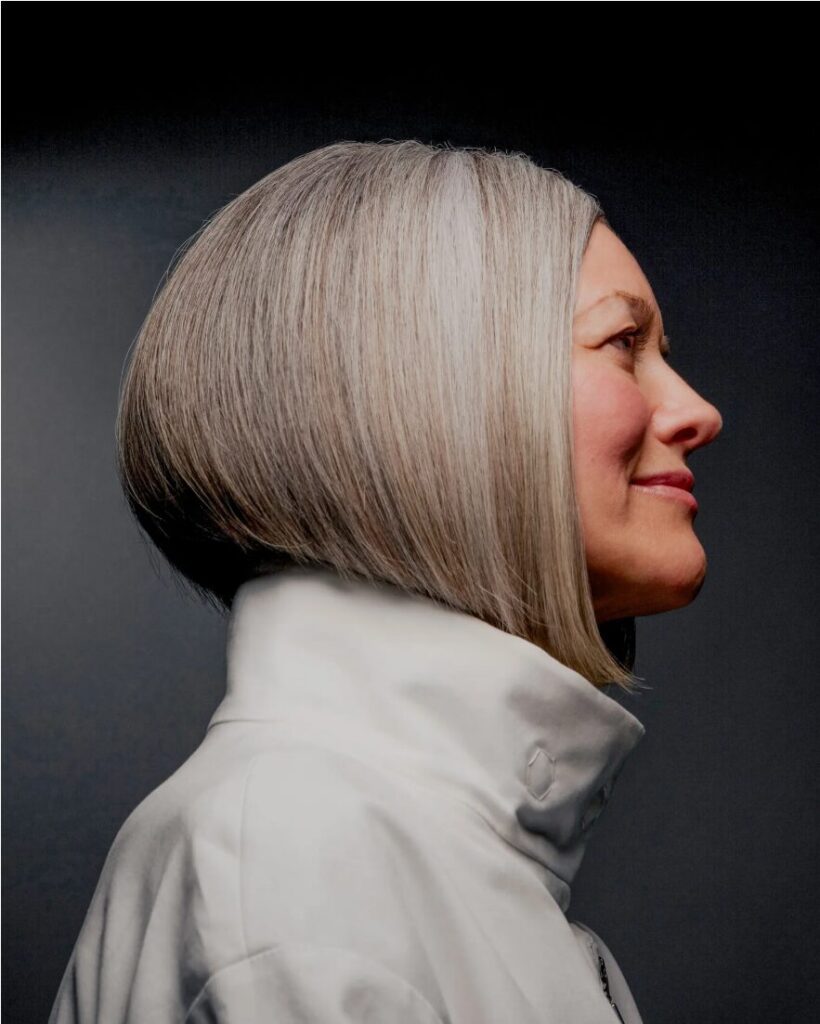
Don’t think that “no longer frequently dyeing and perming” means you can skip deep cleansing. Gray hair can still be covered by styling product residue, air pollution, and sebum, causing the hair color to turn yellow and dull over time.
Hair stylists recommend using a deep-cleansing shampoo regularly (e.g., once a week) to thoroughly remove buildup from the scalp and hair, allowing subsequent hair care products to truly penetrate.
The Role of Color-Correcting Shampoos
- Blue, purple, or silver color-correcting shampoos can neutralize the bronze tones on gray hair, making the hair color look cleaner, cooler-toned, and more textured.
- Experts advise against daily use; once a week is sufficient. Overuse may actually make the hair color appear more purplish, creating the stereotypical “purple-haired grandma” look.
On non-color-correcting days, use a gentle, moisturizing, or smoothing shampoo to achieve a balance between cleansing and moisturizing.
Moisturizing: The Key to Gray Hair Care
Compared to youthful black hair, gray hair is more prone to dryness, tangles, and frizz. Therefore, moisturizing is considered by experts to be a crucial step in maintaining shine and smoothness.
In addition to basic conditioner, it is recommended to regularly use moisturizing hair masks or deep conditioning products to replenish oils and moisturizing ingredients, helping hair regain softness and elasticity.
Practical recommendations:
- Use the same conditioner from the same brand after each shampoo, leave it on for a few minutes, then rinse.
- Once or twice a week, use a moisturizing hair mask instead of regular conditioner, using a hot towel or shower cap to enhance absorption.
To Dye or Not to Dye: How to Choose a Gray Hair Strategy
Completely Accept Gray Hair: Treat It as a “Silver Hairstyle”
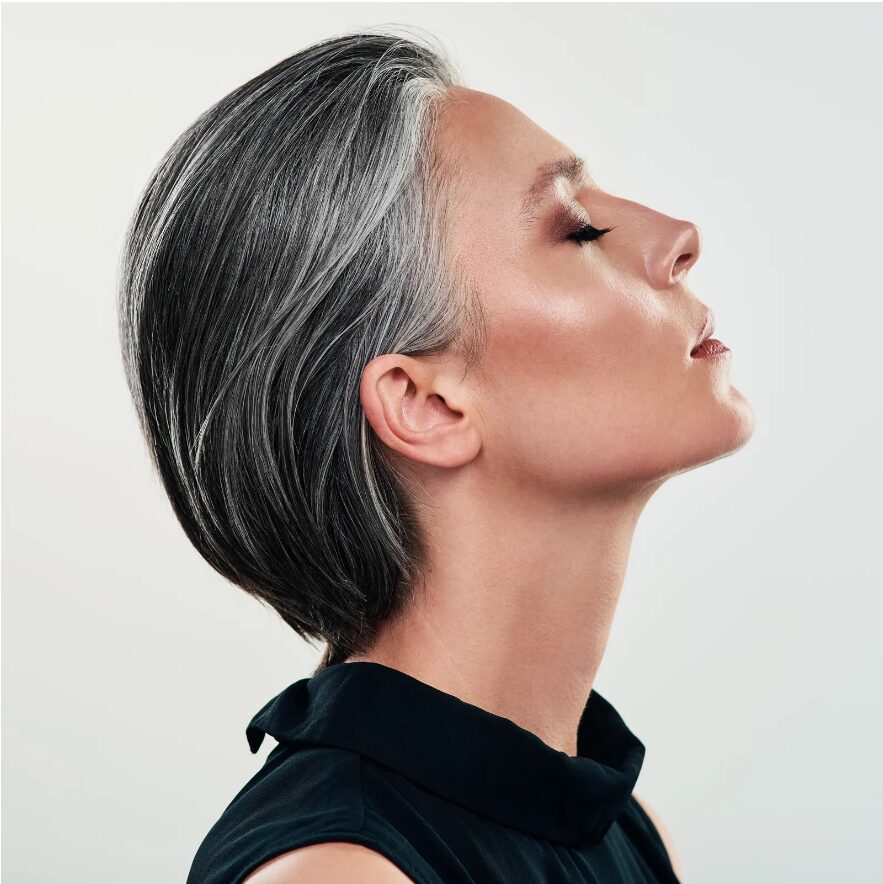
More and more hairstylists are encouraging those with gray hair or premature graying to learn to accept their natural hair color and use cutting and highlights to create layers and volume, rather than simply dyeing their entire head black.
The advantage of this approach is that it requires less maintenance and puts less strain on the scalp. Focusing only on shine and moisturizing can make gray hair look healthy and youthful.
Partial Coloring and Highlights: A Gentle Transition
- If you don’t want to completely transform your hair to silver yet, you can use highlights, low-shine techniques, or gradient colors to blend the gray hair into the overall hair color, making the color difference look natural and extending the touch-up interval.
- When the roots are severely gray, experts generally recommend touching up the roots every 4–6 weeks, adjusting based on the fading situation and individual tolerance.
The key is: no longer view gray hair as a “flaw that must be completely covered up,” but rather as part of the design, using color and lines to rearrange the visual focus.
Post-Coloring Care: Making Hair Color Last Longer
After coloring, without extra care, the fragile nature of gray hair makes it prone to rapid color fading, frizz, and breakage.
Professional advice includes:
- Avoid excessively hot water and frequent shampooing for several days after dyeing to reduce pigment loss.
- Choose color-protecting shampoos and conditioners to reduce fading, maintain shine, and avoid products with high alcohol content or strong cleansing power.
Don’t wash your scalp too thoroughly before dyeing. Moderate oil production can form a protective film, reducing dye irritation and helping the color to be more even and long-lasting.
Protection from Heat Tools and Daily Styling
Gray hair is naturally more fragile, and overuse of high-temperature tools can easily make it drier and more yellow.
Stylists generally recommend the following principles:
- Before each use of a hairdryer, curling iron, or straightener, spray on a heat protectant to create a protective barrier for the hair.
- Avoid prolonged high-temperature blow-drying if possible. If necessary, use a heat-free curling iron or a low-temperature setting, which is more helpful for protecting gray hair in the long run.
For gray hair that is already rough and frizzy, a clear shine serum or hair oil can instantly enhance its appearance, making the hair smoother and the lines more defined.
Practical Steps for At-Home Gray Hair Care
Based on expert advice, your daily at-home routine can be condensed into the following points:
- Use a Deep Clean Shampoo Regularly
Choose one day a week for a deep cleanse to remove residue and oxides, preventing gray hair from continuing to turn yellow.
- Use a Color-Correcting Shampoo
Depending on the degree of yellowing, use a purple or silver shampoo about once a week. Don’t aim for frequency, but rather for a just-right cool-toned shine.
- Strengthen Moisturizing and Repairing
After shampooing, use conditioner or a hair mask, along with a leave-in conditioner, to repair damaged cuticles, leaving gray hair soft and elastic.
- Reduce High-Temperature Damage
Always spray heat protectant before styling. Avoid frequent high-temperature curling if possible; if necessary, use a lower temperature and a shorter styling time. 5. Smart Hair Coloring Planning
If you need to cover gray hair or create a gradient effect, discuss highlights, ombre, or other techniques with a professional stylist to extend the touch-up cycle and reduce the burden on your scalp and hair.
Lifestyle Habits: The Foundation for Longer-Lasting Hair Color
Besides hair care products, experts also remind us that sleep, diet, and stress management also affect scalp and hair condition.
Regular sleep patterns, moderate exercise, and a balanced diet help improve scalp blood circulation and nutrient supply. While they may not be able to “reverse” existing gray hair, they can make new hair growth healthier and more stable in color.
When external care and internal adjustments are done simultaneously, gray hair is no longer a flaw to be hastily concealed, but a texture polished by time—authentic and stylish.